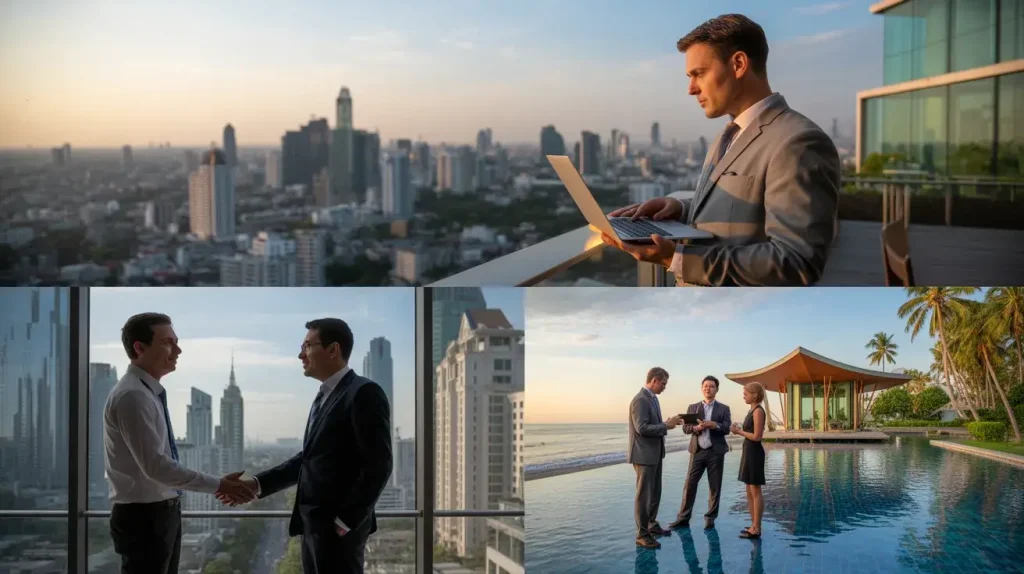
The Strategic Pause: Optimizing Business Travel in the New Southeast Asia
Kelsey Thompson
The landscape of business travel in Southeast Asia has undergone a paradigm shift. The era of the frenetic “fly-in, fly-out” meeting—characterized by airport lounges, windowless conference rooms, and zero engagement with the local culture—is being retired. In its place, a new model is emerging: “Bleisure” (business plus leisure). As regional economies integrate and infrastructure improves, executives and digital nomads are seeking destinations that offer strategic connectivity alongside high-quality lifestyle amenities.
For the modern professional, the choice of destination and accommodation is no longer just about a bed; it is about infrastructure, proximity to emerging markets, and the ability to recharge effectively to maintain peak performance.
Content
Vientiane: The Emerging Frontier
While Singapore and Bangkok have long held the crown for regional commerce, smart money is looking at emerging markets. Laos, specifically Vientiane, is rapidly transforming. With the completion of the high-speed rail linking it to China and the growing investment in the Mekong region, Vientiane is becoming a critical node for logistics and trade.
However, the infrastructure for the business traveler is still catching up. This makes the choice of accommodation critical. A modern Vientiane hotel serves as more than a residence; it is a fully functioning office away from home. Reliability is the currency here—reliable high-speed internet, reliable power, and reliable concierge services to navigate local bureaucracy. For executives looking to tap into the Indochina market, Vientiane offers a strategic foothold. For corporate retreats that require a complete disconnect to foster creative strategy, moving further out to a hotel in Vang Vieng offers a backdrop of limestone karsts that can inspire big-picture thinking.
Pattaya: The MICE Evolution
Perhaps the most surprising shift is the reinvention of Pattaya. Once known primarily for leisure, Pattaya is evolving into a key MICE (Meetings, Incentives, Conferences, and Exhibitions) destination, driven by the Eastern Economic Corridor (EEC) development. It is becoming the go-to spot for corporate retreats and large-scale conventions.
The advantage of Pattaya is the duality of the environment. A well-equipped Pattaya beach hotel allows companies to mix intense strategy sessions with genuine team-building experiences. Imagine a schedule that involves a morning seminar in a state-of-the-art ballroom, followed by a seafood dinner on the beach. This proximity to the ocean creates a psychological break that stimulates creativity.
Bangkok: The Command Center
Despite the rise of new players, Bangkok remains the undisputed command center of Southeast Asian business. It is the transom through which capital, talent, and trends flow. But Bangkok’s intensity can be a double-edged sword. The traffic and the pace can lead to rapid burnout.
Therefore, the strategy for a Bangkok business trip is about finding a “third space.” A well-located hotel in Bangkok offers a necessary efficiency. But beyond location, the facility must offer sanctuary. Additionally, for those with tight schedules focused on regional hopping, a Don Muang airport hotel is an invaluable logistical tool. It allows for late arrivals and early departures without the stress of navigating cross-town traffic, ensuring you make that connection to the next emerging market.
The Portal to Success
As the region grows, the successful business traveler will be the one who knows how to navigate these diverse hubs. It is about using Vientiane for access, Bangkok for networking, and locations like Pattaya for team cohesion. By choosing the right “portal”—the right base of operations—professionals can turn the logistical challenges of Southeast Asia into competitive advantages.
Conclusion
Southeast Asia is entering a new era where professional journeys are no longer defined solely by tight schedules and quick meetings. Instead, the region is offering a more strategic and balanced approach that blends productivity with meaningful experiences. Cities like Vientiane are opening doors to emerging markets and new trade opportunities, Pattaya is transforming into a modern hub for conferences and corporate retreats, and Bangkok continues to serve as the central gateway for networking and regional connectivity. Each destination plays a unique role in shaping a smarter and more efficient way of moving across the region.
For today’s professionals, success depends on choosing destinations that support both work efficiency and personal well-being. Reliable infrastructure, convenient locations, and environments that encourage creativity and relaxation are becoming essential elements of a productive trip. By strategically selecting where to stay and how to structure their schedules, professionals can turn travel into a powerful tool for growth, collaboration, and innovation. In this evolving landscape, Business Travel is no longer just about reaching meetings quickly—it is about maximizing opportunities, strengthening connections, and maintaining the balance needed to perform at the highest level across Southeast Asia.
Hello, I’m Kelsey Thompson. My goal is to show that traveling can be affordable and fun! I love to explore new places and experience different cultures. I also like iced coffee, iced tea, and ice cream (in that order).